 Sneha Kataria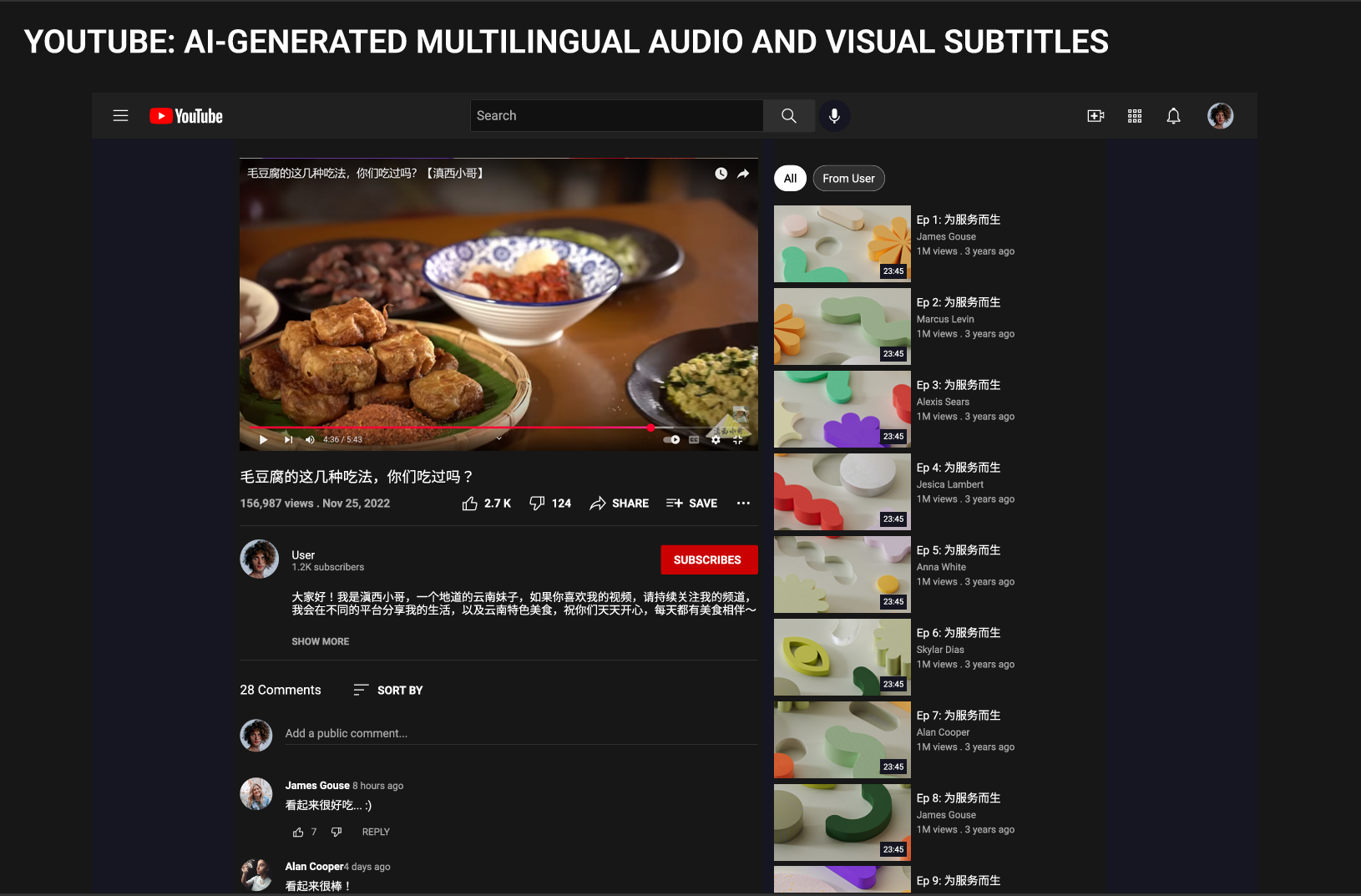
Transforming the overall watching experience by translating every video in any selected language using AI to increase engagement across the globe.

PROBLEM ALIGNMENT
BACKGROUND
YouTube is the world’s leading video-sharing platform, boasting 122 million daily active users from diverse linguistic and cultural backgrounds. It serves as a dynamic hub for users to enhance their businesses, acquire knowledge, and explore new skills through its extensive video library. However, a significant challenge persists: the limited availability of content in various regional languages. This language barrier often hampers users’ ability to fully understand and engage with the platform’s vast resources, restricting its accessibility and impact across diverse audiences.
PROBLEM STATEMENT
YouTube currently supports only 80 languages, offering limited options for subtitles and translations. This restricts many users from accessing content in their preferred languages, creating an inconvenient and fragmented experience. User research reveals that individuals often resort to creating multiple profiles to consume content in their desired language, further limiting their ability to fully leverage YouTube’s services. To address this, we aim to develop an AI-powered feature that translates any YouTube video into the user’s selected language, enabling a seamless, personalized, and inclusive content consumption experience.
HIGH LEVEL APPROACH
The proposed approach aims to eliminate language barriers on YouTube, empowering more users and businesses to leverage the platform effectively while driving greater reach and inclusivity. By enabling users to access any content worldwide in their preferred language through an AI-powered translation feature, this enhancement will significantly boost engagement. It will create a seamless and enjoyable experience for users, making content consumption more accessible, personalized, and impactful.
GOALS
- Enhance the ease and accessibility of content production and consumption on YouTube for users worldwide.
- Empower content creators to utilize AI-generated translations for their videos effortlessly, broadening their reach to diverse audiences.
- Enable viewers to watch videos in their preferred language through AI-powered audio translations and captions, improving user satisfaction.
- Foster inclusivity by engaging users who primarily communicate in regional languages, ensuring they feel valued and included on the platform.
- Increase user engagement by making global content accessible and enjoyable, creating a more connected and seamless experience.
NON- GOALS
The auto-generative feature is limited to translating content audio and captions only. It does not extend to translating user comments in the comment section.
ASSUMPTIONS
-
Users face challenges in reaching a broader audience due to the limited availability of language options for content.
- The auto-generative feature will provide a platform for all users to express themselves, ensuring inclusivity without
-
compromising sensitive information.
- The feature will adhere to privacy laws and compliance regulations, maintaining user trust and data security.
SOLUTION ALIGNMENT
COMPETITION
Multiple competitive applications, such as InvideoAI, Lingvotube, Kapwing, and Filmora, already offer AI-driven solutions to transcribe audio or auto-translate videos into various languages. However, YouTube holds a significant competitive advantage with its vast user base and unparalleled reach. Trusted by billions of subscribers, YouTube can leverage its platform to implement this feature, enhancing the customer experience and adding unique value that competitors cannot easily replicate.
SIMPLICITY
The feature is designed to be simple and highly user-friendly, allowing seamless adoption. Users can easily access it by adjusting their language settings, making it intuitive and convenient for everyone.
COMPATIBILITY
The auto-translating audio and caption feature is highly compatible with YouTube’s existing infrastructure. It integrates smoothly into the platform, leveraging YouTube’s video playback system and subtitle settings. The feature can work across a wide range of devices, including desktops, mobile phones, and smart TVs, ensuring accessibility for users regardless of their preferred device. Additionally, it supports various content formats, making it adaptable for content creators and users across the platform.
BRAND RECOGNITION
YouTube’s strong brand recognition plays a crucial role in the adoption of the auto-translating audio and caption feature. As the world’s most popular video-sharing platform, YouTube is trusted by billions of users, which enhances the likelihood of adoption. The platform’s reputation for innovation and user-centric features will make users more likely to embrace this new feature, knowing it aligns with YouTube’s commitment to improving accessibility and inclusivity. The feature’s integration into YouTube’s existing ecosystem, combined with its widespread recognition, will drive confidence and encourage adoption.
RISKS
The adoption of the auto-translating audio and caption feature carries some risks. One primary concern is the accuracy of AI-generated translations, which may not always meet users’ expectations, potentially leading to misunderstandings or dissatisfaction. Additionally, relying on AI for translations could result in inconsistencies across different languages, affecting the user experience. There is also a potential risk related to privacy and compliance, as translations need to be carefully managed to avoid mishandling sensitive or personal content. Despite these risks, YouTube’s established infrastructure and commitment to privacy and security can mitigate many of these concerns, ensuring the feature’s successful implementation.
CHANGE
The adoption of the auto-translating audio and caption feature represents a significant change for YouTube users, especially for those accustomed to navigating language barriers manually. This change is likely to be welcomed by users seeking a more seamless, inclusive experience, as it removes the need for multiple profiles or third-party translation tools. However, it may require some adjustment from both content creators and viewers. Creators may need to understand the AI-generated translation process and how to manage it, while viewers may need to adapt to using the new language settings. Over time, as users become more accustomed to the feature, the transition will become smoother, enhancing user engagement and satisfaction.
 Customer review dashboard insights report